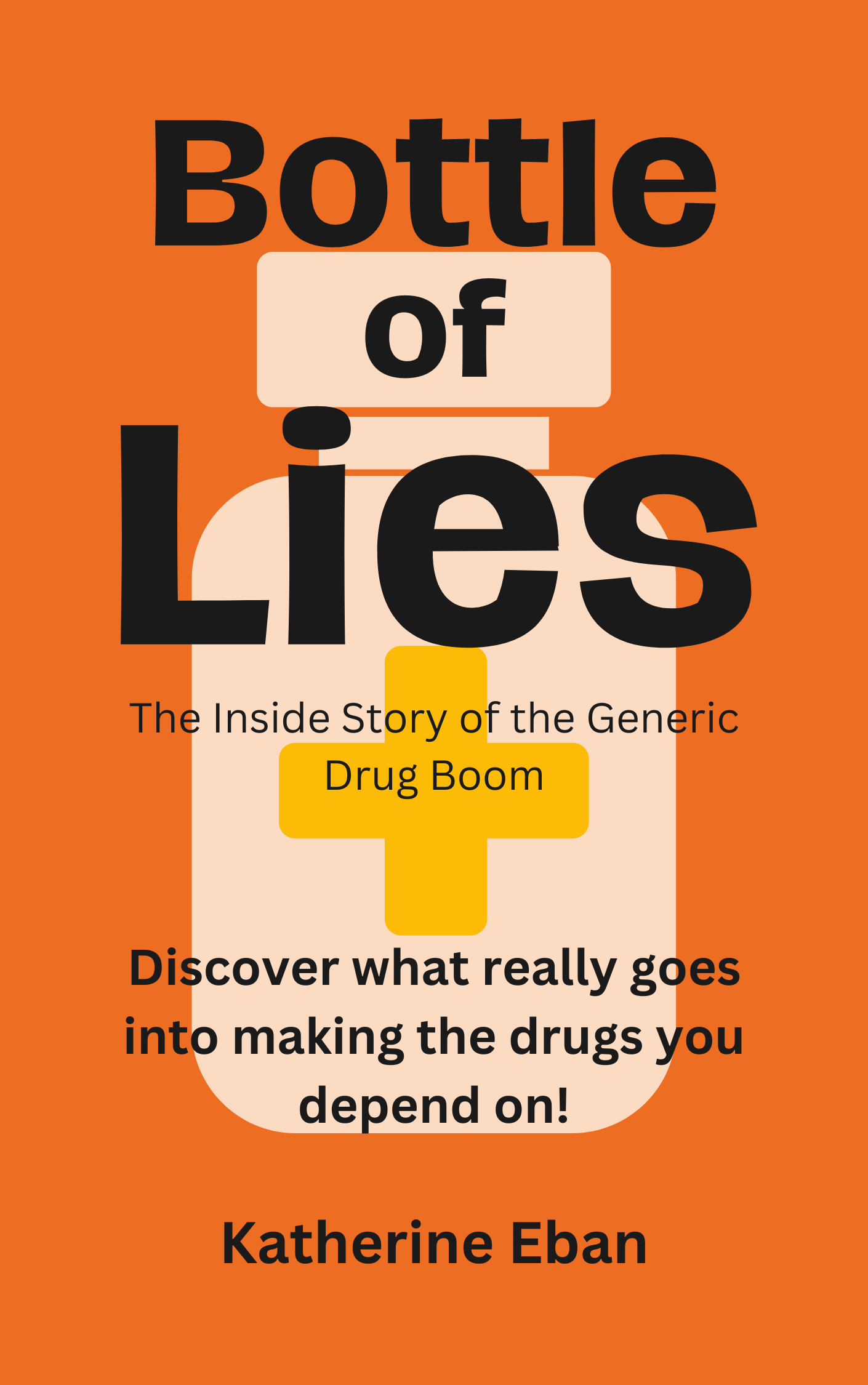
Katherine Eban's journey into the world of generic drugs began with a simple phone call from Joe Graedon, host of NPR's The People's Pharmacy. Patients were reporting serious problems with their generic medications - drugs that were supposed to be equivalent to brand-name versions but somehow weren't working right. Some patients who had been stable on brand-name medications for years suddenly relapsed when switched to generics. Others experienced devastating side effects. The Food and Drug Administration (FDA) maintained everything was fine, but the mounting evidence suggested otherwise.
This mystery launched Eban on a decade-long investigation that took her across four continents, deep into pharmaceutical manufacturing plants, and face-to-face with whistleblowers who risked everything to expose the truth. In China, government officials followed her and hacked her phone. In Mexico, a source passed her stacks of internal documents in a bar. In India, she uncovered widespread fraud in drug testing and manufacturing.
The reality she discovered was sobering. While generic drugs have made life-saving medications affordable for millions worldwide, the push for ever-lower prices has created dangerous compromises in quality. Many generic drugs are manufactured in facilities that cut corners, falsify data, and deceive regulators. The book's findings are particularly relevant because generic drugs now make up 90% of America's drug supply. Yet as Eban discovered, current regulatory systems aren't equipped to ensure consistent quality across this vast global manufacturing network. Her work exposes not just individual bad actors, but systemic problems in how generic drugs are made, tested, and regulated.
Join us, as we take an unprecedented look behind the scenes of an industry that affects nearly everyone who takes medication.
Summary
The fight for drug quality remains unresolved. While Ranbaxy crumbled and whistleblowers like Dinesh Thakur spoke out, the FDA gradually softened its stance on inspections. Peter Baker's discoveries in China and India exposed widespread fraud, but regulatory compromises persisted. Even today, the same forces that prioritized profits over safety continue to shape our medicine supply, leaving patients to bear the invisible costs.
When Medicine Meets Morality
In late 2001, while autumn leaves turned gold and crimson in Hopewell, New Jersey, Dinesh Thakur, a 33-year-old information scientist at Bristol-Myers Squibb (BMS), met his senior colleague Rashmi Barbhaiya for what seemed like a casual walk. BMS's campus embodied everything about structured, regulated American pharmaceutical manufacturing - from its precisely mowed grass to the carefully placed emergency poles every hundred feet. This was where groundbreaking drugs like Pravachol and Plavix were developed, where scientists won prestigious awards, and where...
The Price of Truth
In late 2004, Thakur received what seemed like a routine corporate assignment at Ranbaxy Pharmaceuticals. His task? Review the company's regulatory data submissions from the past two decades. This assignment would unravel one of the pharmaceutical industry's most extensive frauds.The investigation began in Ranbaxy's offices in Gurgaon, India, where Thakur assembled a team of six project managers. The team's findings were staggering. In India, 100% of drug data was fabricated. Even in highly regulated markets like the United States and...
The Long Road to Justice
In late 2004, Ranbaxy Laboratories presented a polished face to the world. Its executives stood in plastic ponchos beside former President Bill Clinton at his presidential library opening, having donated $250,000 for the privilege. By early 2004, Ranbaxy had hit $1 billion in global sales and became the fastest-growing foreign generics maker in the U.S. market. But behind this gleaming facade lurked a troubling reality.Thakur had witnessed systemic fraud in the company's drug testing practices. The company's internal emails revealed...
The Scandal Catches Fire
The scale of Ranbaxy deception emerges through the detailed accounts preserved in FDA documents and whistleblower testimonies.The tale continues with a secret meeting at the AmeriSuites Hotel in Princeton, where FDA investigator Debbie Robertson finally met the mysterious informant known to her only as "M." This source, Thakur, had spent fourteen months providing the FDA with precise details about Ranbaxy's operations - down to the locations of bathroom facilities and computer servers. His meticulous attention to detail would prove crucial...
Justice Stumbles
The story of what happened after the Ranbaxy raid is both fascinating and frustrating - a tale of how even the most straightforward cases of corporate wrongdoing can get tangled in bureaucratic red tape and internal conflicts.Congressional investigator David Nelson spotted something odd in 2008. The FDA had told him their raid on Ranbaxy's New Jersey headquarters had nothing to do with drug quality. Yet there he sat, reading a 28-page motion from Maryland prosecutors that detailed Ranbaxy's "systemic fraudulent...
The Final Chapter of the Ranbaxy Saga
The ultimate irony of the Ranbaxy case came crashing down with tiny pieces of blue glass. After all the years of investigation into fraudulent practices, it was actual glass fragments in Ranbaxy's generic Lipitor that validated the FDA compliance staff's worst fears. The company never should have been approved to make the drug.This discovery prompted the FDA to send Peter Baker, a young consumer safety officer, to inspect Ranbaxy's Toansa plant in Punjab. Baker had volunteered for the India posting,...
Reckonings and The Aftermath
The FDA's relationship with Indian pharmaceutical regulators was in shambles in 2013. After settling its case against Ranbaxy, a major Indian drug manufacturer caught in widespread quality violations, the FDA needed someone who could bridge the cultural and regulatory divide. Enter Altaf Lal - an American of Indian origin with silver hair and a warm manner, who had spent six years as the U.S. health attaché in New Delhi.Lal's mission seemed straightforward: build trust with Indian regulators, conduct thorough inspections,...
More knowledge in less time
The Art of Community
Get the key ideas from nonfiction bestsellers in minutes, not hours.
Find your next read
Get book lists curated by experts and personalized recommendations.
Shortcasts
We’ve teamed up with podcast creators to bring you key insights from podcasts.
About the Author
Katherine Eban is an award-winning investigative journalist, best-selling author, Vanity Fair special correspondent and Andrew Carnegie fellow. Her articles on pharmaceutical counterfeiting, gun trafficking, coercive interrogations by the CIA and COVID-19’s origins, have won international attention and numerous awards. Her Vanity Fair article “Rorschach and Awe,” which first identified the architects of the CIA’s torture methods used on 9/11 detainees, inspired the 2019 film “The Report.”
Thank you for registering with Storise.
Your journey with books and ideas begins now, anytime, anywhere.
You can now use your registered email to log in to the app.






















.png)