On October 24, 1960, Charles Dumont, a composer, nervously visited Edith Piaf's Paris apartment. Piaf was a global superstar! Initially reluctant to even meet them, she agreed to hear just one song from Dumont and his lyricist partner Michel Vaucaire. The song? "Non, je ne regrette rien" ("No, I regret nothing at all"). The two-minute song became her signature anthem, with over a million copies sold within a year. Its defiant lyrics ("It's paid, swept away, forgotten. I couldn't care less about the past") captured the public imagination.
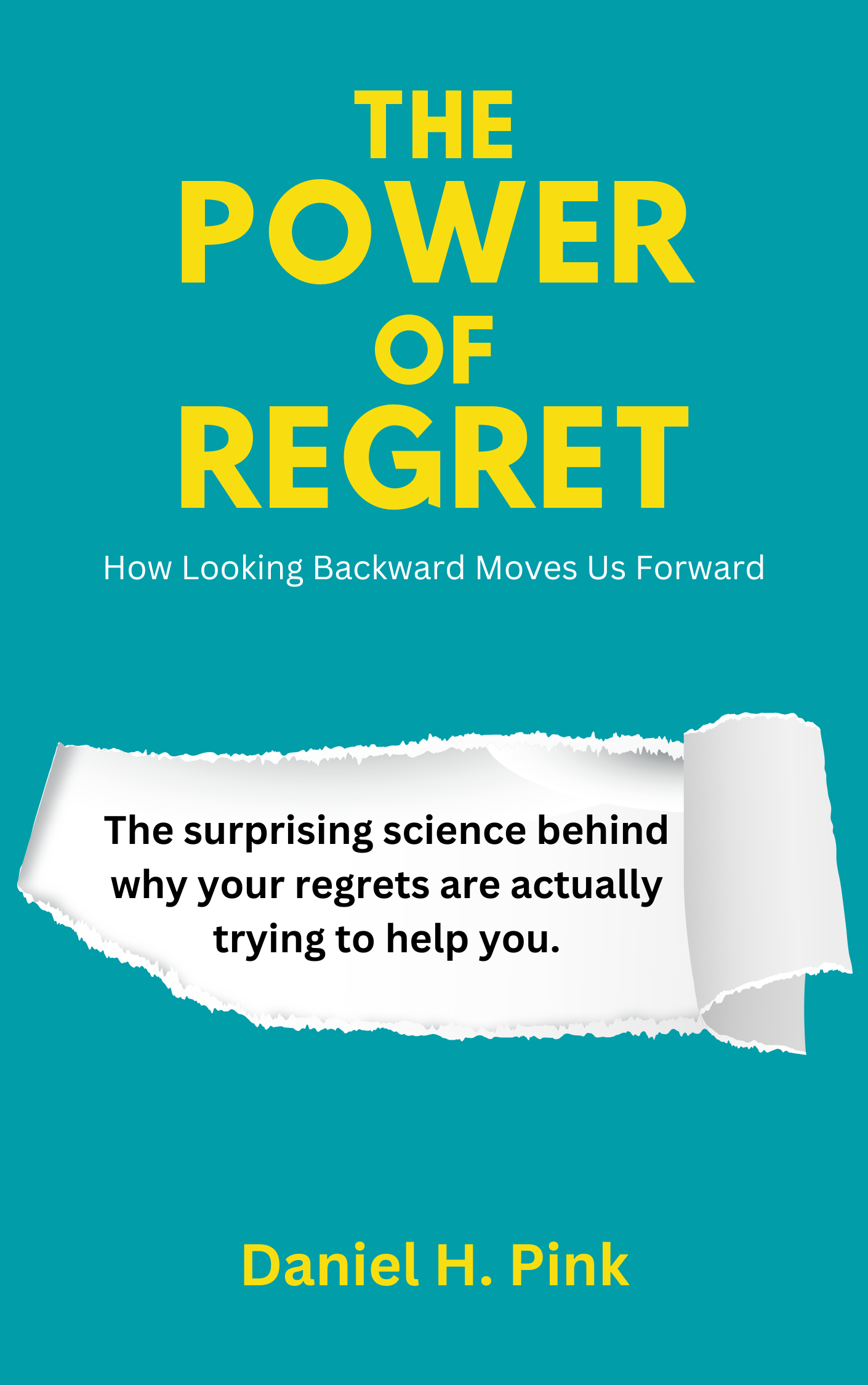
From there to the Instagram-ready "NO REGRETS" tattoos adorning countless arms, we've embraced a seductive but ultimately self-defeating philosophy: that regret is a weakness to be banished. But what if our most uncomfortable emotion is actually a hidden superpower? In "The Power of Regret," Daniel Pink reveals how our backward-looking moments might be our best tool for moving forward. Let’s harness this power of regret!
Summary
Regret is like this universal membership card to being human. Every time we look back and wince at something we did (or didn't do), we're actually getting a little instruction manual for our future. "Hey, maybe try being kinder next time" or "You know what? Take that risk you've been nervous about." Our regrets are like little nudges pushing us toward better versions of ourselves.
Your Regrets Are Actually Good For You
Let's talk about that gnawing feeling you get when you think about the job you didn't take, the relationship you let slip away, or the words you wish you hadn't said. That's regret - and contrary to what thousands of self-help books, pop songs, and tattooed arms might tell you, it's not your enemy!!!Daniel Pink's research reveals something fascinating: 82% of Americans regularly look back and wish they'd done things differently. That's more people than those who regularly floss their...
Your Regrets Are Actually Teaching You Something
It should be clear by now that if you ever wished you could go back in time and make a different choice, you're not alone. Pink's examination of regret reveals something profound: our remorse has patterns and while the surface details vary, the deep structure always fell into one of these four fundamental categories:Foundation regrets stem from failures to be responsible. Jason Drent exemplifies this perfectly. Despite rising to executive positions in retail, at age forty-three he has "nothing to...
How to Undo What's Done and Find Silver Linings
Jeff Bosley thought he was making a statement. At twenty-nine—the oldest recruit at Fort Bragg—he wanted to fit in with his fellow soldiers. So one night, he and some buddies visited a tattoo parlor where, for about a hundred dollars, Jeff got nine black letters inked onto his left arm in Papyrus font: NO REGRETS.Fast forward fourteen years. Jeff's marriage had ended. His college career had stalled across eight years and two schools with no degree. And his dream of...
Constructive Regret Management
Not every regret comes with a clear path to fixing it. Sometimes, at least is just not enough. Like for Cheryl Johnson, who watched a treasured friendship with her college classmate Jen fade over two decades. Like many of us, she carried this regret silently, unsure how to process it or learn from it. But as we've been explaining, regret doesn't have to be just an uncomfortable emotion we try to suppress. Research shows we can transform it into a...
Anticipating Regret
The story of regret usually begins with "If only I had..." But what if we turned that around? What if instead of letting regret haunt us from the past, we could use it as a spotlight illuminating our path forward? That's exactly what Alfred Nobel did when he read his own obituary.In 1888, he had a bizarre experience - he read his own obituary in the newspaper. A journalist had confused him with his recently deceased brother and published Nobel's...
More knowledge in less time
The Art of Community
Get the key ideas from nonfiction bestsellers in minutes, not hours.
Find your next read
Get book lists curated by experts and personalized recommendations.
Shortcasts
We’ve teamed up with podcast creators to bring you key insights from podcasts.
About the Author
Daniel H. Pink is the author of five New York Times bestsellers, including his latest, The Power of Regret: How Looking Backward Moves Us Forward. His other books include the New York Times bestsellers When and A Whole New Mind — as well as the #1 New York Times bestsellers Drive and To Sell is Human. Dan’s books have won multiple awards, have been translated into 46 languages, and have sold millions of copies around the world. He lives in Washington, DC, with his family.
Thank you for registering with Storise.
Your journey with books and ideas begins now, anytime, anywhere.
You can now use your registered email to log in to the app.






















.png)