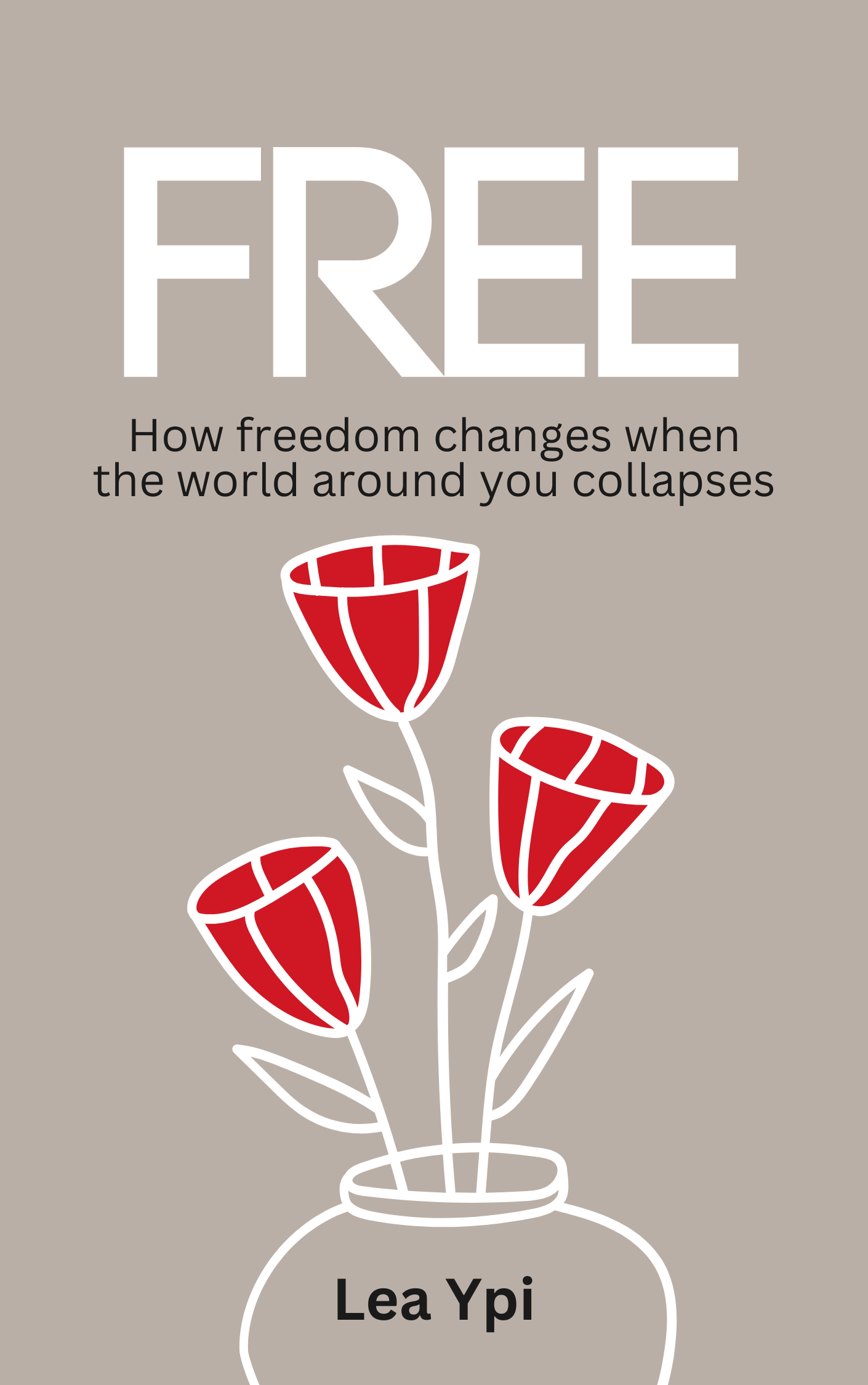
Freedom is one of those ideas we often take for granted—until the world we know falls apart. In Free, we’re taken deep into the experience of growing up in Albania during the seismic shift from communist dictatorship to capitalist democracy. But this isn’t just a political history—it’s an emotional journey. Seen through the eyes of a girl raised in a regime that promised everything yet delivered little, it shows how the definition of liberty can swing wildly depending on where you stand. The collapse of one system and the arrival of another didn’t bring the clarity people expected. Instead, it exposed new contradictions and new uncertainties.
Now begins the story of how freedom can be shaped by silence, defined by secrets, and challenged by choice—and what happens when the promises of liberation don’t match the reality.
Summary
Free reminds us that freedom is rarely what it seems. The Albanian experience teaches us that liberation isn't a triumphant endpoint but a continuous negotiation between external circumstances and internal truth. It’s not a final state or a universal ideal—it’s something we struggle with, define for ourselves, and often stumble through. Whether inside a dictatorship or a democracy, freedom is shaped by silence, by choices, and by the stories we’re allowed—or brave enough—to tell.
Childhood in a Closed World
To be a child in a tightly controlled regime is to live in a curated reality. Everything seems certain. In 1980s Albania, a child’s world was filled with slogans, songs, and statues. The system offered stability, predictability, and a strong sense of belonging. It felt safe—not necessarily in an emotional sense, but in the way a walled garden is safe from the outside. There were no confusing options, no contradictory messages. The government provided your education, defined your ideals, and...
The Family Code of Silence
Behind every closed door in Albania, families were living double lives. Not because they wanted to, but because they had to. While the government controlled what happened outside, families developed their own survival system inside: strategic silence. Parents didn't tell their kids the whole truth about their family history—not because they didn't trust them, but precisely because they loved them too much. One wrong comment at school could bring disaster down on everyone's heads.For one family, this meant carefully erasing...
The Collapse and Its Consequences
When Albania’s communist regime fell in the early 1990s, it didn’t unravel slowly—it collapsed like a dam breaking. After decades of extreme isolation, the most Stalinist regime in Europe disintegrated with stunning speed. For citizens, this collapse wasn't experienced primarily as political liberation but as profound disorientation. Overnight, the entire framework that had structured daily life—however repressive—simply vanished. It was a time of possibility and chaos, of hope and profound loss.People poured into the streets, but what came next wasn’t...
Learning to Choose Without a Map
Have you ever walked into a massive store with too many options and felt completely overwhelmed? That's what freedom felt like in post-communist Albania—except the stakes weren't just "which cereal should I buy?" but "what kind of person should I become?"For a teenager on the edge of adulthood, this was both thrilling and terrifying. Suddenly, you had to decide what kind of person you wanted to be, without the comfort of collective ideology. Did you embrace capitalism? Did you leave...
Belief in Transition
When political systems collapse, they don't just take institutions with them—they destabilize belief systems that have shaped how people understand themselves and their world. In Albania, this ideological whiplash was particularly severe because the communist regime had been exceptionally dogmatic and isolated. The transition didn't merely swap one political framework for another; it inverted an entire worldview. For some, the shift was liberating. For others, it felt like losing part of their soul.It wasn’t just a matter of rejecting one...
Identity in a Shifting Landscape
When a political system defines your worth, your sense of self is always at risk. In Albania, people learned this firsthand. One day you might be a model citizen; the next, a suspect. Your background, your name, even your ancestors’ decisions could suddenly become liabilities.After the collapse, the categories didn’t disappear—they simply changed. People who had once been persecuted became celebrated. Others, once protected, found themselves shunned. Identity, once fixed and predictable, became volatile. And in this new reality, people...
More knowledge in less time
The Art of Community
Get the key ideas from nonfiction bestsellers in minutes, not hours.
Find your next read
Get book lists curated by experts and personalized recommendations.
Shortcasts
We’ve teamed up with podcast creators to bring you key insights from podcasts.
About the Author
Lea Ypi is an Albanian-born Professor of Political Theory at the London School of Economics (LSE), renowned for her acclaimed memoir Free: Coming of Age at the End of History, which explores her childhood in late communist and post-communist Albania, uncovering family secrets and questioning the meaning of freedom amidst political upheaval and personal identity.
Thank you for registering with Storise.
Your journey with books and ideas begins now, anytime, anywhere.
You can now use your registered email to log in to the app.



















.png)