

















.png)




Introduction
We've all been there - sitting through a terrible movie because we paid for the ticket, holding onto a failing stock because selling feels like admitting defeat, or making snap judgments about job candidates based on first impressions. Why do we sometimes make such poor choices when we should know better? Because your daily decisions only seem simple. They actually hide complex psychological patterns that affect how we think and act.
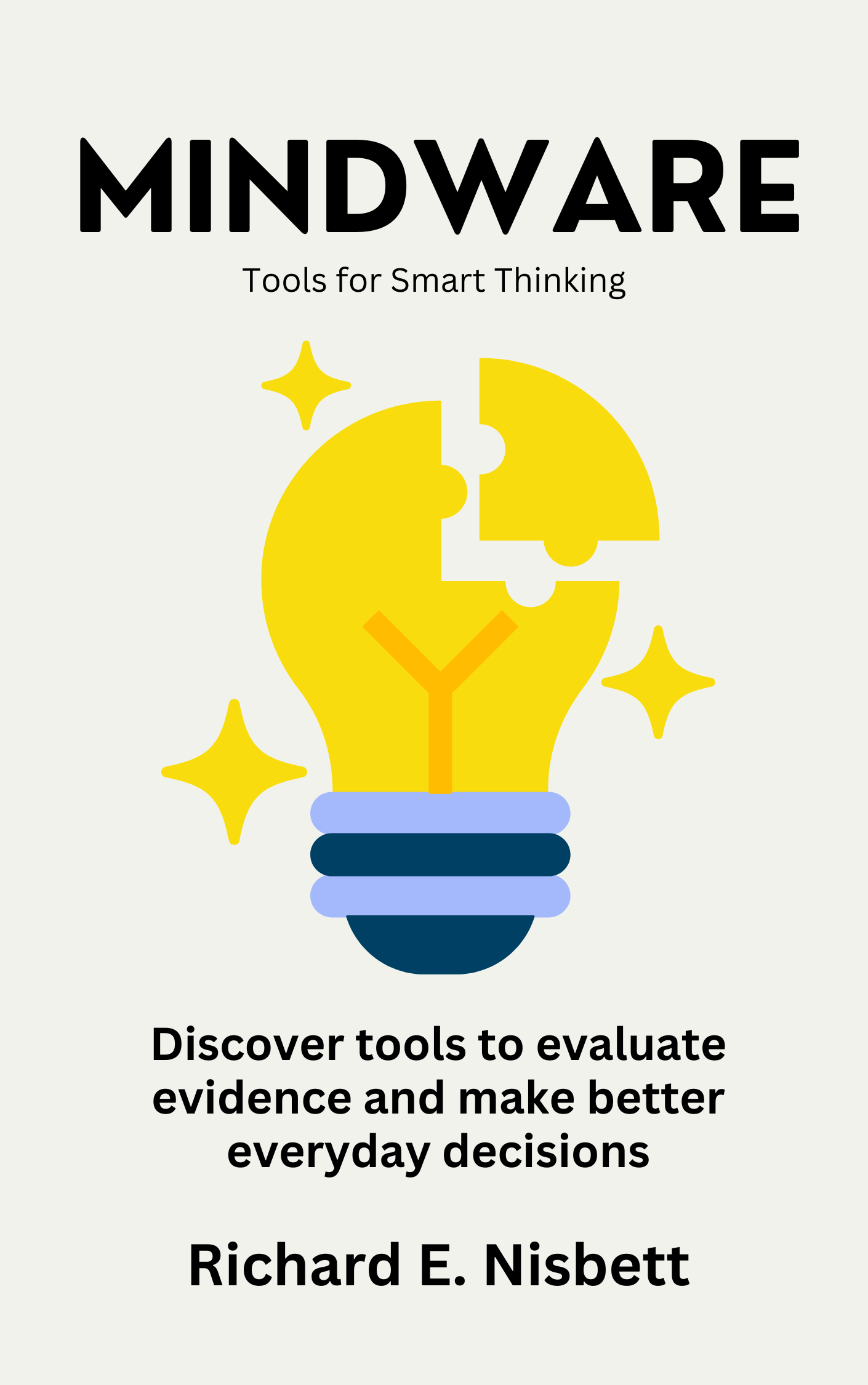
Richard E. Nisbett's Mindware tackles these patterns head-on. The book is a practical guide that teaches you how to use scientific thinking tools to understand your patterns and make better choices in both your personal and professional life. By bringing together powerful ideas from various fields - psychology, economics, statistics, logic, and philosophy, he shows you how these tools connect to real situations you face every day.
Mindware is organized into six main sections. It starts with understanding how our minds work (including the crucial role of the unconscious), moves through making better choices, detecting relationships between events, understanding causality, and ends with two powerful approaches to reasoning - Western logic and Eastern dialectical thinking.
The author makes a bold promise: while reading this book won't increase your IQ score, it will make you smarter in a practical sense. You'll learn to avoid common reasoning mistakes, evaluate evidence more effectively, and make better decisions. These aren't just academic skills - they're practical tools that can save you money, help you make better career choices, and improve your understanding of both yourself and others. Let's begin!
Summary
So! That was both concerning and encouraging, right?
On the concerning side, we've seen how our minds often fail us in ways we never suspected. Our intuitions are frequently unreliable, our judgments are plagued by biases we don't recognize, and our confidence in our own reasoning abilities far exceeds our actual capabilities. We make snap decisions based on insufficient data, see patterns where none exist, and cling to our existing beliefs even in the face of contradicting evidence. But there's a silver lining to this sobering assessment. By understanding these limitations and biases, you're now better equipped to combat them. The concepts and tools you've learned throughout this book will become part of your mental toolkit, ready to be deployed when you need them - often without conscious effort.
While you won't become a perfect reasoner overnight (none of us can), you're now better prepared to question your assumptions, examine your evidence more carefully, and approach problems with greater analytical rigor. You'll catch yourself falling into these traps more often, and each time you do, your ability to avoid them in the future will strengthen. All the best!


.png)