The desire to acquire and assert power is an inbuilt trait in mankind! Most of us wish for a certain degree of control in our personal and professional environments and participate in power dynamics. Whether we want to accept it or not, the need to feel powerful can’t be dismissed as a relic of our history. We still continue to crave a certain degree of influence over our peers and even loved ones. The methods - tyrannical, scheming and evil at some times but increasingly subtle at others are still much the same. And you can become a master of this game as well! Learn to forge your way through the corridors of power - corporate, politics or the arts.
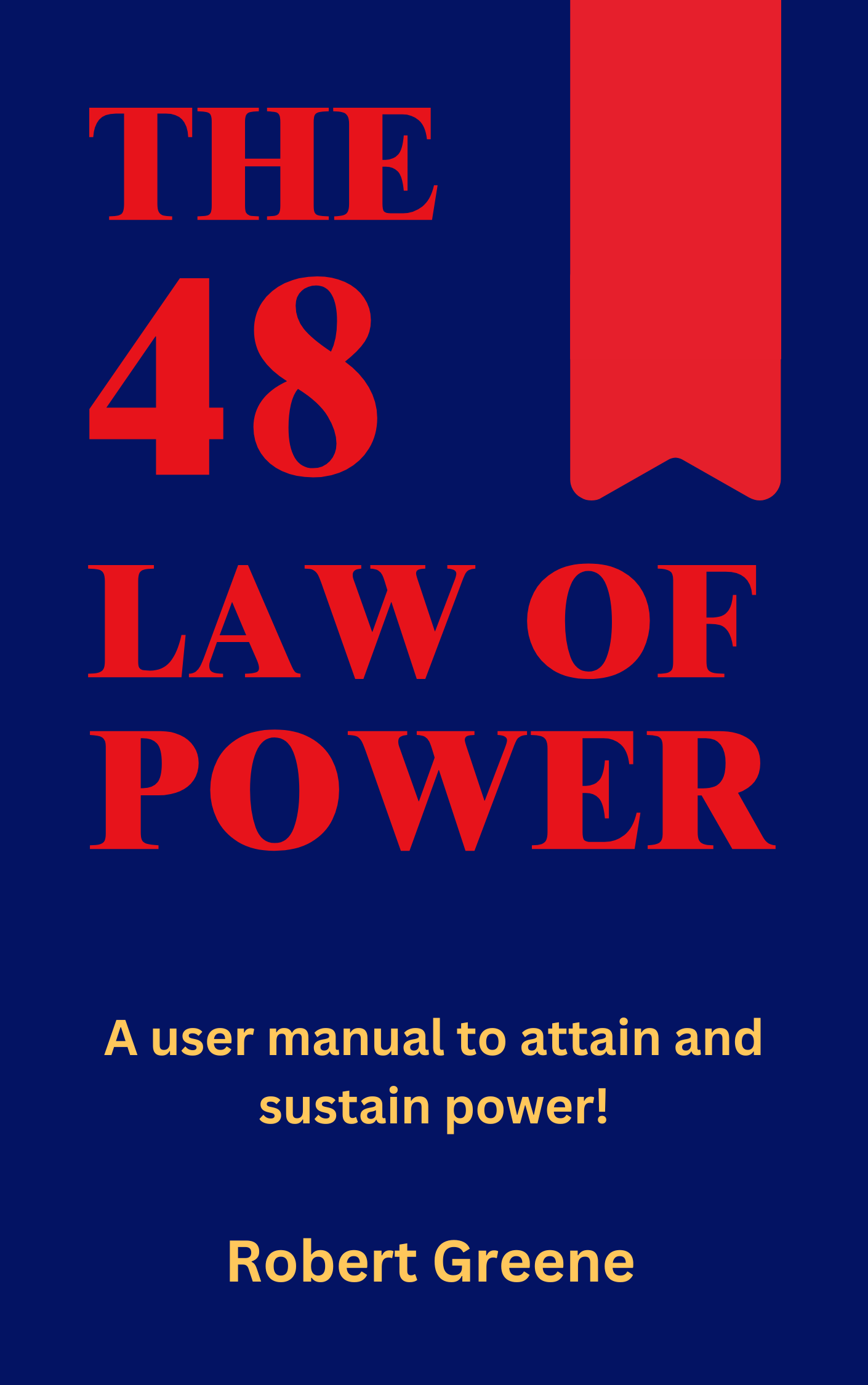
The 48 Laws of Power is a look at the history of power dynamics in the world and distils 3000 years of wisdom from notable powerful people like Louis The Great, Alexander The Great, and other influential personalities. The book is packed with thoughtful insights into the acquisition of power, how to maintain it and more importantly, how to protect yourself from power.
The 48 Laws of Power by Robert Greene is a New York Times bestseller. Greene is a renowned public speaker with expertise in topics like seduction, power and strategy. In this summary, we discuss 13 of the 48 laws given in the book and discover how dark and sometimes bright secrets of power will completely change your power dynamics with others.
Summary
The 48 Laws of Power by Robert Greene is a monumental work for future leaders who wish to acquire and sustain power. The game of power is always on, whether you wish to succeed in a corporate career or like to solidify your business's presence in the market. The 48 time-tested laws of power will help you to understand the power dynamics from a historical perspective and comprehend its relevance and application in modern society. History has the potential to teach us countless lessons in control and dominance. And those who learn from the fall and rise of others will have the potential to become the wisest and smartest future leaders of today.
Outperform your boss, or not?
We fall prey to this idea pretty early in our careers and learn the hard way... Do not outperform your manager! Simple. See power is about exerting influence over juniors/subordinates, relishing a power trip, and the compulsion to feel important. But, manipulating power dynamics in your favour may take attention away from a superior who, incensed, jealous & seeing you as a threat to their position, might even end up firing you or hurting you in any other way just...
Keep your enemies closer than your friends and take credit for everything!
Imagine a world where taking credit for other people's work is not only accepted but celebrated as a powerful move. Sounds outrageous? Well, open your eyes please, because it's happening out there! History is littered with the stories of successful people who are actually just master manipulators. They know that taking credit for other people's work is the ultimate power move. Why waste your precious brain cells when you can just exploit others? It's like having a team of minions...
Know When to Pick Your Battles and Avoid Arguments
When facing a formidable foe, is it better to stand and fight or surrender to their might? Our gut instinct shouts to protect ourselves at all costs against aggression. Yet Greene argues surrender can empower us more than sacrifices for hollow victories - and that’s our next law. Heard of the writer Bertolt Brecht? Having fled Europe for America with other communist intellectuals during WWII, Brecht was brought before Congress alongside radical peers suspected of communism influence in Hollywood. While...
What Deioces and Chuko Liang Teach Us
A basic rule of power is that too much availability breeds disinterest, whether in love or politics. Greene uses the example of Deioces, who eagerly offered to mediate disputes in the city of Medea in ancient Iran where he was admired for his skill. Yet the more available he made himself, the more people took him for granted. Deioces failed to make himself unavailable during the peak of his popularity. The Laws of Power argue only disappearance can make people...
Distract and Disorient
Standing out is essential! Everything is judged by appearance, say what you will. If you plan on controlling anything at all, you must seem larger than life. Be the talk of the town. Invite drama, even notoriety if necessary. Better slandered than ignored, better infamous than forgotten. To be discussed in a power statement in itself! That’s one law. Our next law - keep your hidden motives close, reveal just enough to draw others into your aura trying to discern...
Is selective honesty the best policy?
Greene says that honesty is rarely the best policy, no matter what the age-old dictum says. This is true, especially in the realm of glorious power. Neither the road that leads to power nor maintaining a powerful position demands an individual to be married to the idea of absolute honesty.Instead, practising selective honesty is the best policy. Most people who end up in superior positions know how to benefit from the honesty of others. In fact, it is best to...
It's all about how powerful you seem, the image you represent!
Appearances matter. Acting like royalty is a big part of maintaining the power play. Respect is freely given to those who think that they deserve it in the first place. The most important thing about being in a superior position is to act with superiority. Sometimes, a person decides to take the humble road and act equally to those in lower positions. But history has taught us that the strategy almost always fails!The life of Louis Phillippe, King of France...
Never isolate yourself to protect yourself
Man can not function or succeed in isolation! Our social contract obligates us to interact with people and move in social circles. Power-hungry people know the importance of mobility in social circles and understand that self-isolation in the face of an imminent threat is a counterproductive move. Never resort to hiding yourself in a fortress-like situation when in threat. A fortress seems formidable from the outside. But hiding in a fortress means that your competition or enemy already knows your...
Powerful individuals are supposed to appeal to people's self-interest, not goodwill.
The game of power can not be played with the dice of goodwill. We have also learnt that we can't assume power in isolation. Staying in power mandates you to seek help from people constantly. It's crucial to get support from people but do it in the right way. Never appeal to anyone's goodwill for assistance. Instead, find out what motivates a person and appeal to that person's self-interest. Back in the 16th century, the Portuguese empire moved towards Asia...
More knowledge in less time
The Art of Community
Get the key ideas from nonfiction bestsellers in minutes, not hours.
Find your next read
Get book lists curated by experts and personalized recommendations.
Shortcasts
We’ve teamed up with podcast creators to bring you key insights from podcasts.
About the Author
Robert Greene is the author of the New York Times bestsellers The 48 Laws of Power, The Art of Seduction, The 33 Strategies of War, The 50th Law, Mastery, The Laws of Human Nature, and most recently of The Daily Laws.
In addition to having a strong following within the business world and a deep following in Washington, DC, Greene’s books are hailed by everyone from war historians to the biggest musicians in the industry (including Jay-Z, Drake, and 50 Cent).
Greene attended U.C. Berkeley and the University of Wisconsin at Madison, where he received a degree in classical studies. He currently lives in Los Angeles.
Thank you for registering with Storise.
Your journey with books and ideas begins now, anytime, anywhere.
You can now use your registered email to log in to the app.






















.png)